





Global Collaboration: Strengthening Academic Networks with International Institutions
Dr. Muhammad Irfanudin Kurniawan
In an era of accelerating globalization, international collaboration has become one of the primary pillars that can drive progress in various fields, including education. Collaboration opens up significant opportunities for educational institutions to expand their knowledge base, enhance teaching quality, and create broader and more meaningful research opportunities. In this context, Darunnajah, which has now evolved into a university with three faculties—Islamic Studies, Business, and Science & Technology—holds great potential to strengthen its academic networks with international institutions and apply the principles of rahmatan lil alamin in its mission to educate and foster the character of future generations.
Collaboration, as discussed in various leadership studies, is one of the fundamental managerial skills. In any organization or institution, each individual plays a different role—some oversee routine daily activities, while others design major steps or leaps forward. This is also true for universities; the role of each element is vital to building a robust and sustainable educational ecosystem. As KH. Sofwan Manaf stated, “In an organization, each individual plays a different role—some manage the daily routine, and others contribute to designing the leap forward.” Collaboration is the art of merging these roles into a single unified struggle.
In Islam, we are taught to always work together in goodness, a principle reflected in many verses and hadiths. Allah SWT states in Surah Al-Ma’idah (5:2), “And cooperate in righteousness and piety, but do not cooperate in sin and aggression.” This verse is not only about cooperation between individuals in a social context but also within a broader scope, including academic and scientific collaboration. Collaboration based on values of goodness and piety will yield great works that bring benefits to humanity.
Both local and global collaboration is not merely an alliance, gathering, or meeting between educational institutions; it is a platform for sharing knowledge, experience, and innovation. It not only encompasses the exchange of curricula or study programs but also involves the development of human resources, access to cutting-edge technology, and the ability to address increasingly complex global challenges. By building international networks, an educational institution can not only enhance its reputation but also provide greater opportunities for students and faculty to broaden their horizons and contribute to global issues more effectively.
Darunnajah is one of the few pesantren-based educational institutions that has grown into a source of pride for Muslims in Indonesia. Founded by KH. Abdul Manaf Mukhayyar, KH. Qomaruzzaman, and KH. Mahrus Amin in 1961, this pesantren has passed down a spirit of struggle and dedication in educating the younger generation with noble character and extensive knowledge. In the founders’ view, Darunnajah is not merely an educational institution but a “field of struggle,” as KH. Abdul Manaf Mukhayyar once said, “Darunnajah is a field of struggle, not a field of livelihood.”
This view carries profound meaning. The education provided at Darunnajah is not solely aimed at producing individuals ready to compete in the job market, but also to generate a generation with a high fighting spirit to advocate for goodness, justice, and progress for the ummah. Therefore, Darunnajah is not just a university that teaches knowledge but a higher education institution that emphasizes the importance of active contributions to society, both locally and globally.
After a long journey, Darunnajah has now evolved into Darunnajah University. This success is proof of the spirit and dedication of its founders and administrators, who have tirelessly worked to advance education. However, this struggle will not stop here. As time progresses, the demand to forge collaborations with international institutions becomes even more pressing.
The educational philosophy of Darunnajah, which consistently emphasizes the struggle to build a generation that is of integrity, knowledgeable, and of noble character, is now faced with global challenges. A world that is increasingly interconnected through information technology, cultural exchange, and economic cooperation requires an education that can adapt to the demands of the times. Therefore, establishing global collaboration with international institutions has become a necessity.
Building academic networks with renowned universities around the world is not an impossible task. Such collaboration enables Darunnajah University to introduce more innovative curricula, update teaching methods, and open opportunities for students to gain international experience, both through student exchange programs and collaborative research. This collaboration will have a significant impact on producing future leaders with a global perspective, while still upholding the Islamic values taught in the pesantren.
The Faculty of Islamic Studies has collaborated with leading Islamic universities in the Middle East and Asia, such as Al-Azhar University in Egypt, with guest lectures directly delivered by the Grand Sheikh of Al-Azhar, Prof Dr. Ahmad Muhammad Ahmad Ath-Thayyeb, as well as international seminars with the Rector of Al-Azhar University, Prof. Dr. Salam Daud. Cooperation with Al-Azhar continues to expand across various sectors, such as training held in Madinah Bu’uts, Egypt, for approximately three months, as well as the establishment of Markaz Tathwir at Darunnajah University as a selection center for studying at Al-Azhar.
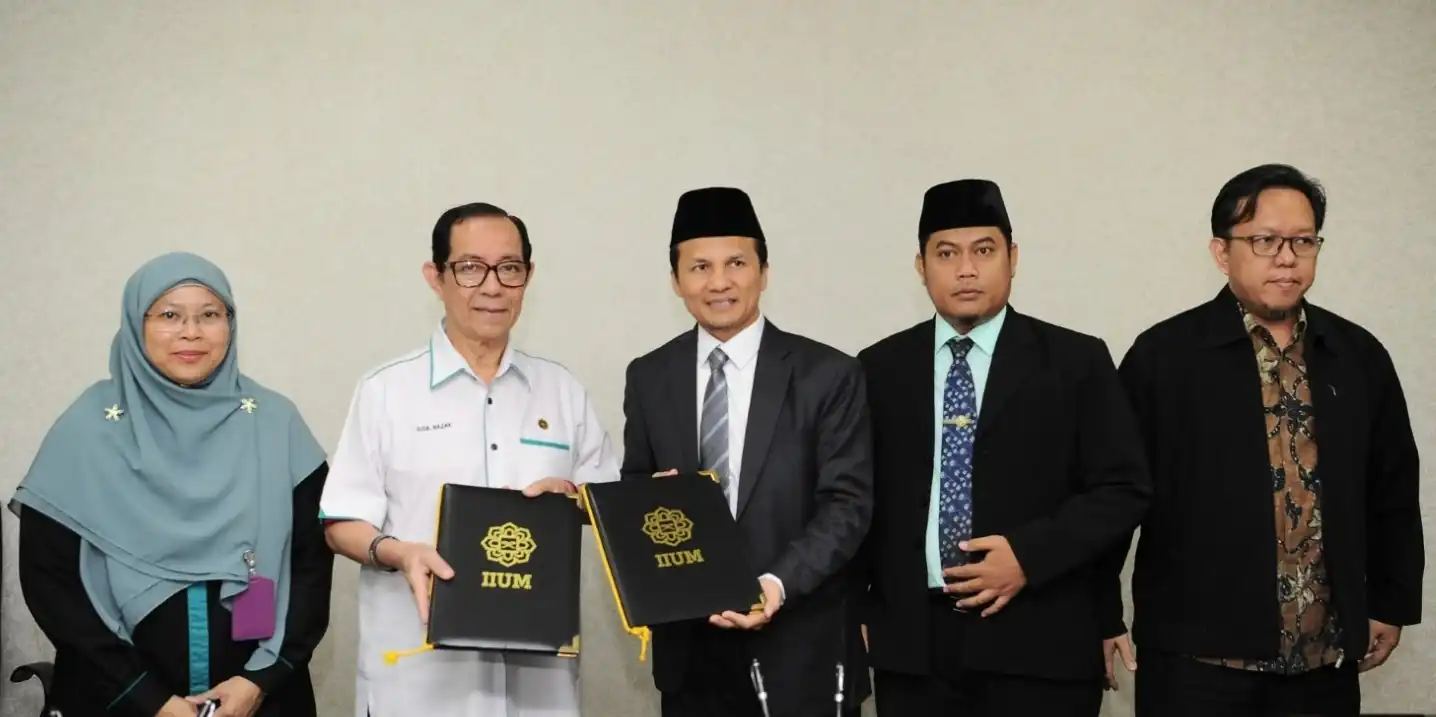
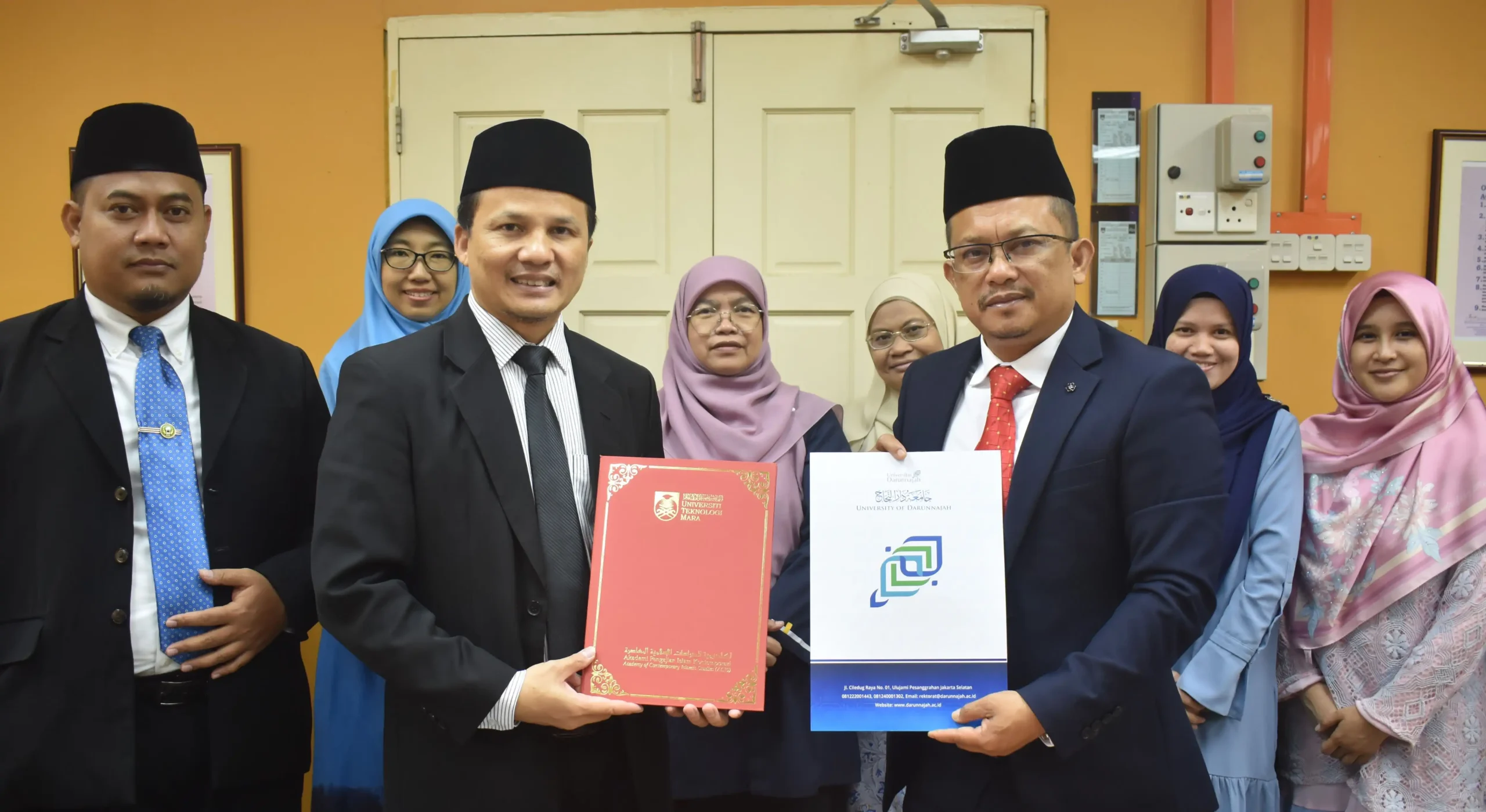
Furthermore, Darunnajah has established partnerships with Umm Al-Qura University in Mecca, which includes programs to enhance Arabic teaching skills for faculty members, and the Islamic University of Madinah with an intensive Arabic program for youth. Darunnajah also collaborates with the International Islamic University Islamabad (IIUI) on student exchange programs, improving English proficiency, and hosting international seminars. Collaboration with Universiti Sains Islam Malaysia (USIM) has included Ph.D. programs in Leadership and Administration with a focus on Pesantren Management, which is a unique focus of Darunnajah University. Other partnerships with universities in Malaysia include the International Islamic University Malaysia (IIUM), Universiti Teknologi MARA (UiTM) in Shah Alam, and Selangor Islamic University (UIS).
Regarding Western universities, the Faculty of Islamic Studies at Darunnajah University has established a partnership with Hartford International University, which is implemented through international seminars. Additionally, there is collaboration with the Islamic Society of Baltimore (ISB) in Maryland, USA, in the form of faculty exchange programs. Several Darunnajah faculty members have broadened their horizons through study visits to the United States, facilitated by ISB, and have conducted focus group discussions (FGD) with the Jamaica Muslim Center (JMC) community in New York.
Meanwhile, the Faculty of Business has built relationships with ABE UK, a renowned international educational institution offering opportunities for competency development in business and management. This collaboration has led to the establishment of DBS (Darunnajah Business School), which will become an international program. Additionally, the faculty has partnered with the Indonesian Islamic Business Forum (IIBF), organizing various training sessions and workshops to enhance the business competencies of Darunnajah administrators.
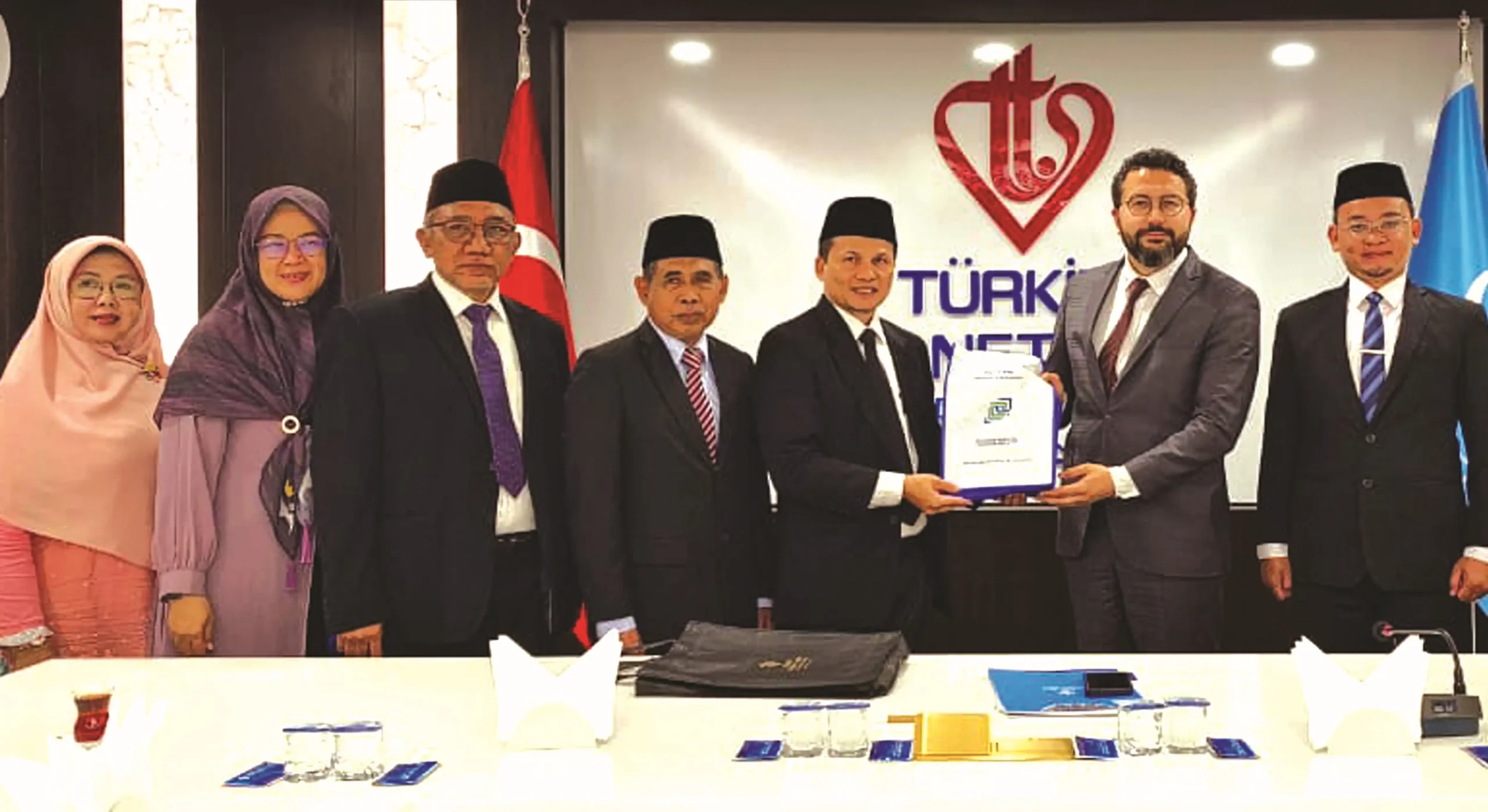
The Faculty of Science and Technology, with its focus on technology development and innovation, has partnered with Cisco Networking Academy, aiming to improve the quality of Human Resources (HR), particularly for faculty members. It has also collaborated with Digital Transformation Indonesia through seminars on Cybersecurity, as well as with Hitachi Ltd, a leading global technology company from Japan, organizing Visiting Lectures for students and curriculum reviews with faculty members.
These increased collaborations are inseparable from the spirit of struggle expressed by KH. Mahrus Amin: “If my life ends, do not let my struggle stop, continue it!” This advice has become a foundation upheld by every administrator, faculty member, and student of this waqf-based pesantren university. Every effort, resource, shoulder, and thought must be the foundation to continue the legacy of Islamic education and expand both the local and global educational scope and quality.
Through global collaboration, Darunnajah not only strives for the sustainability of Islamic education but also makes a tangible contribution to addressing the major challenges faced by humanity. Prominent Muslim figures in the United States, such as Mr. Abdul Malik Mujahid, founder of Soundvision TV, have expressed their readiness to synergize in spreading peaceful Islamic messages. Similarly, Razi Jafri, a Muslim producer and director from the United States, drew significant inspiration during his visit to Darunnajah, a university born from a pesantren.
Moreover, collaborations in the management of waqf have inspired numerous guests, such as Dr. Mohamed Alhajaji, president of Pure Hands, a charitable foundation based in Texas, USA. The delegation from the Maldives Ministry of Islamic Affairs conducted a study visit on waqf management at Darunnajah, as did guests from the Sokoto State Zakat and Waqf Commission, Nigeria. By strengthening academic networks with international institutions, Darunnajah not only produces graduates ready to face the challenges of the times but also educates them to become agents of change that bring prosperity to humanity worldwide.
As the Prophet Muhammad SAW said in a hadith narrated by Imam Al-Bukhari, “Indeed, Allah loves that when one of you does something, he does it in the best way.” This hadith reminds us to always give our best in every aspect of life, including collaboration. Collaboration conducted with good intentions and clear principles will yield positive impacts, not only for individuals but for humanity as a whole.
In conclusion, we must reflect together that collaboration, both local and global, is not just about expanding networks but also about strengthening the spirit of struggle for better education. Darunnajah University, with its clear mission and vision, has great potential to build relationships with international institutions. With the “field of struggle” spirit passed down from its founders, Darunnajah must continue to develop and fight for the quality of education that integrates the values of religion, business, and technology.
Collaboration will open greater opportunities for Darunnajah University to produce a generation of youth who are not only knowledgeable but also have a sense of responsibility for social change. As KH. Mahrus Amin’s message reminds us, this struggle must not stop and must continue to achieve the noble goals of Islamic education based on the values of struggle and goodness for humanity.